
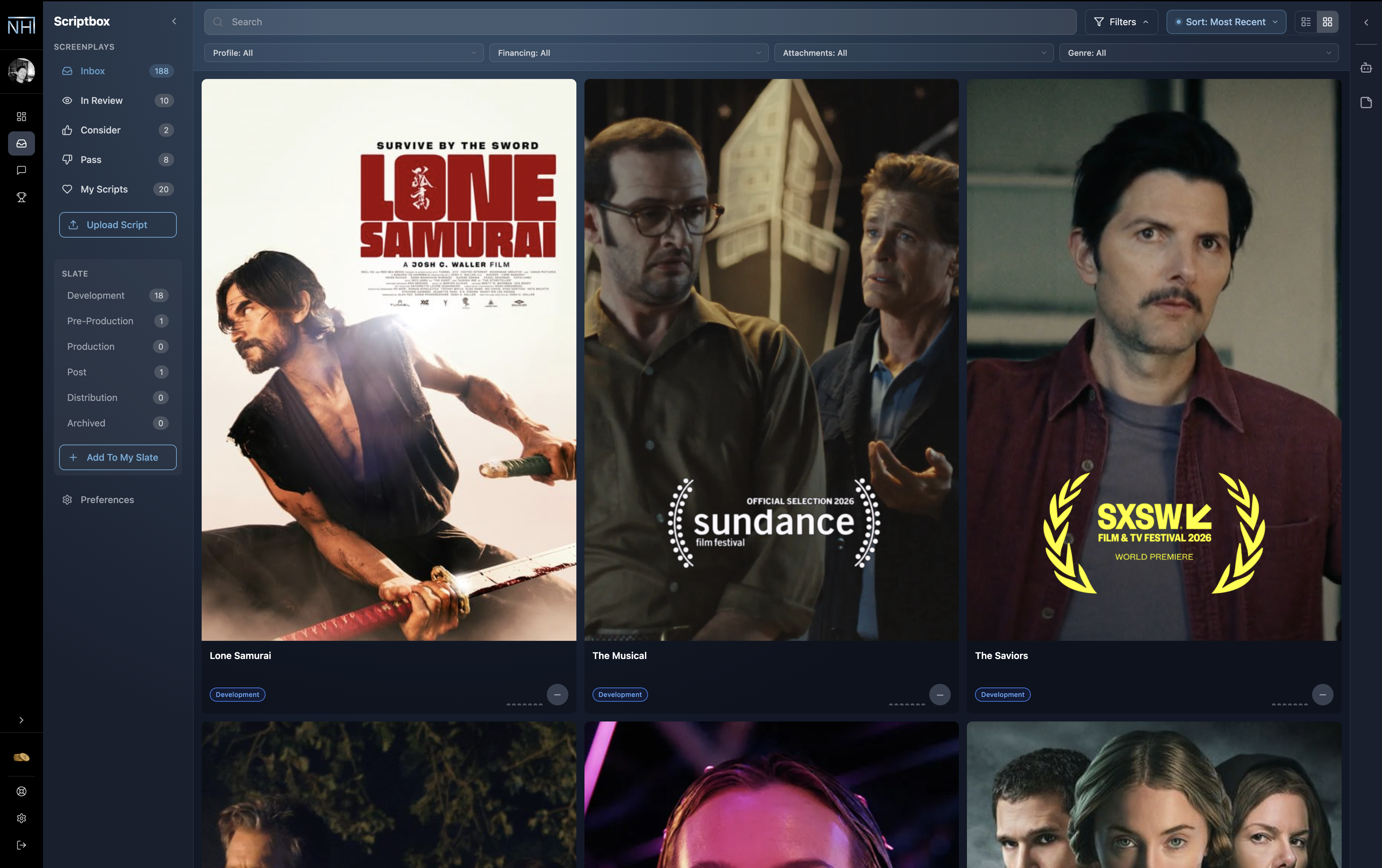
MySlate
Managing a production company's slate is the ultimate balancing act. A slate is not just a list of scripts the company likes; it is a diversified portfolio of creative assets at various stages of development, financing, and production.
In a modern entertainment ecosystem, managing a slate involves tracking intellectual property (IP), balancing financial risk, managing talent relationships, and steering projects through a multi-year pipeline.
Adding a script to Your Slate allows you to utilize other New Hollywood services like Pitcher, generate schedules, teasers and projections, manage rights, casting, financing, attachments, etc. To add a script to Your Slate, you need to do or have one of the following.
SlateLifecycle
A script doesn't just go from 'submitted' to 'filmed.' It moves through a highly complex, often multi-year lifecycle. A production company's profile needs to track projects across the following development tranches.
Stage 01
Active Development
Scripts that have been optioned or bought. The company is actively working with the writer through draft iterations (Polishes, Rewrites). The tool must track version history and archive creative notes from various executives.
Stage 02
Packaging
This is where the script becomes a commercial package. The company attaches a director, lead actors, or key producers. The New Hollywood Slate can track LOIs (Letters of Intent) and talent availability windows.
Stage 03
Financing
Tracking how the project will be paid for (e.g., equity investors, pre-sales, streaming licenses, state tax incentives).
Stage 04
Production
Cameras start rolling and the slate becomes a live control panel. Principal photography schedules are tied to cash-flow forecasts, dailies are pushed into review queues, and budget-vs-actual is tracked against every department lead.
Slate Management
Everything you need in one place
Project Dashboard
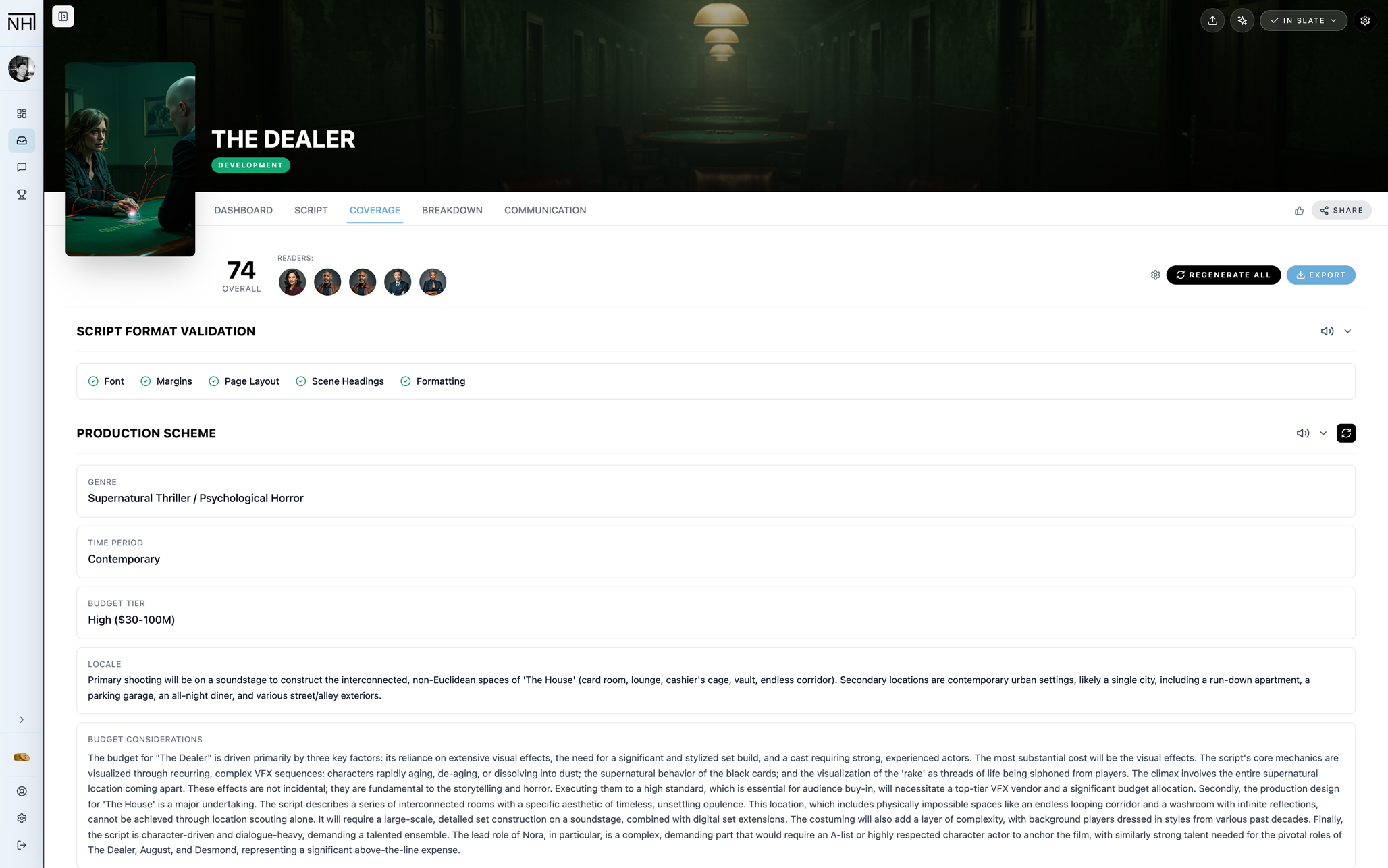
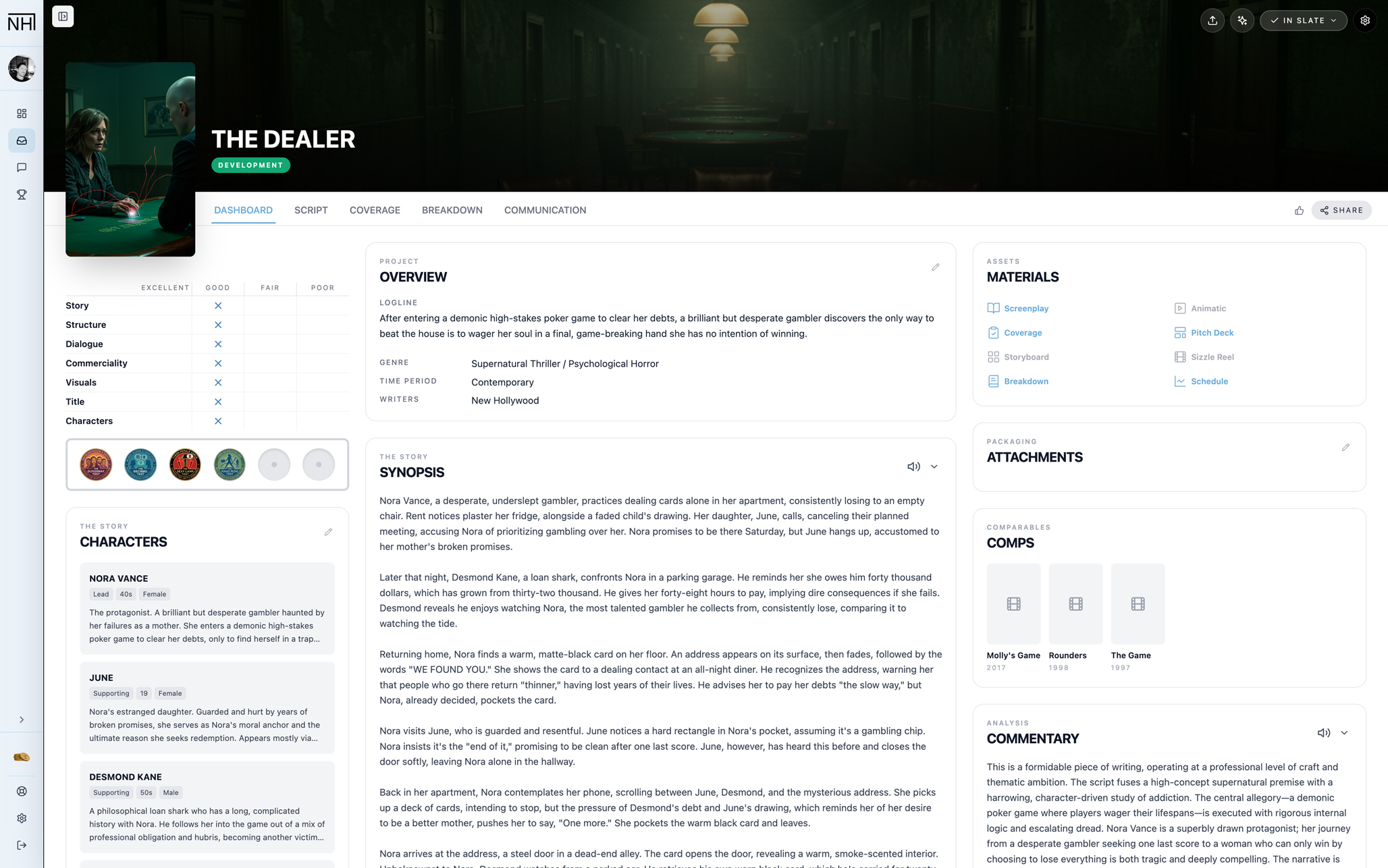
Automated Analysis is where your Scriptbox shifts from a passive database to an active digital assistant. The goal here isn't to replace the human element of choosing art, but to act as a triage system—filtering out technical errors, analyzing structural balance, and giving creative executives a clear snapshot of what a story is about before they commit hours to reading it.
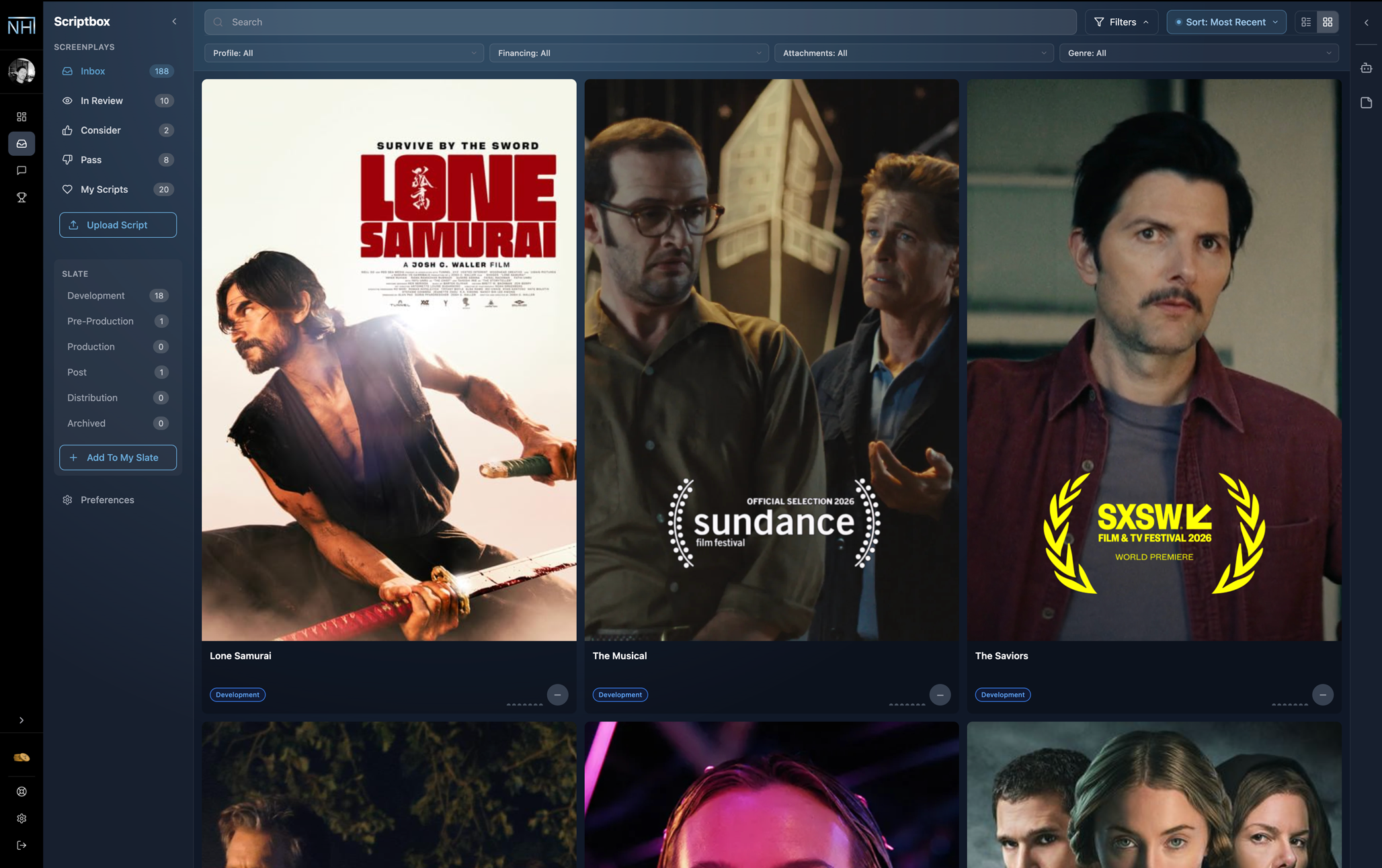
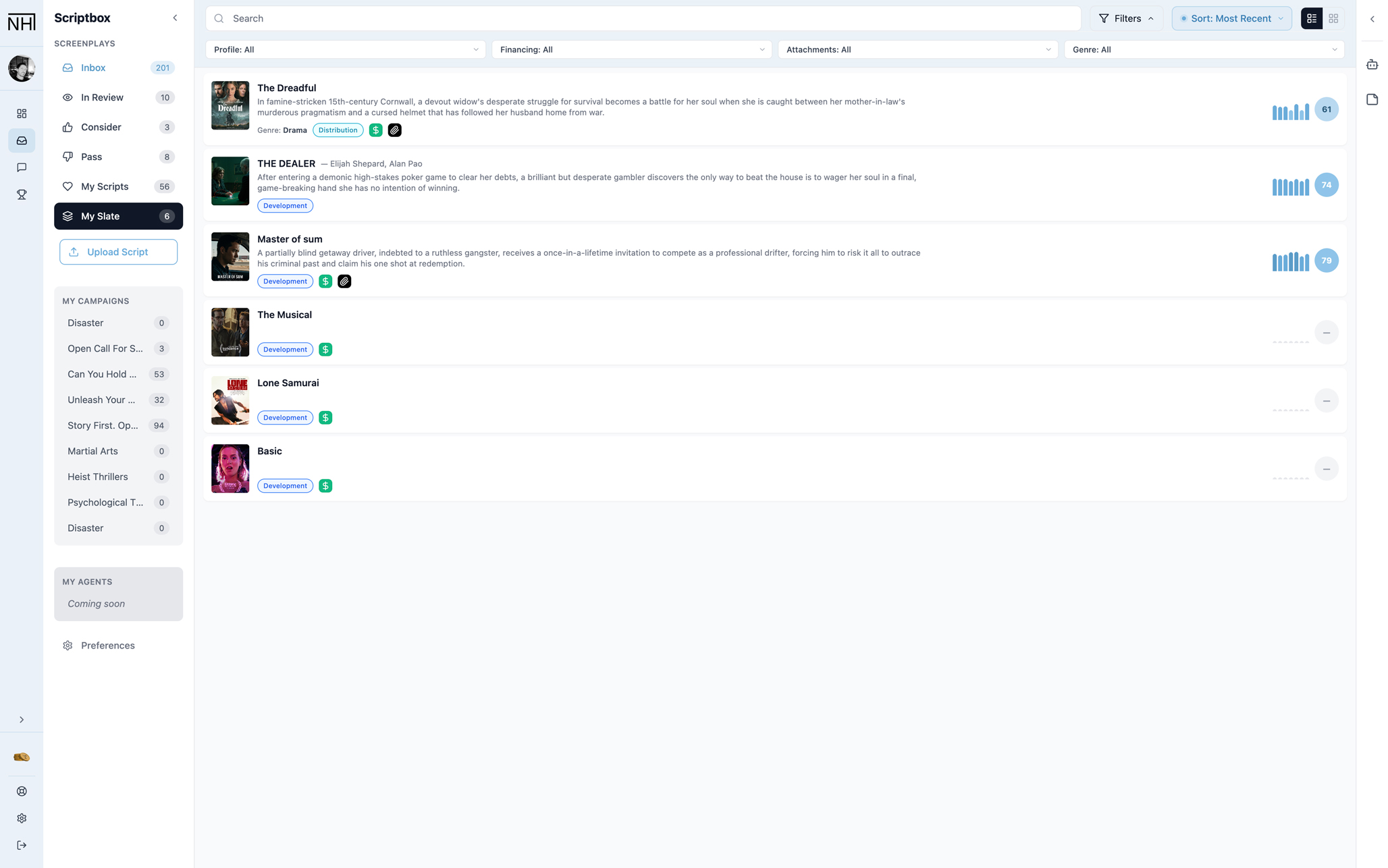
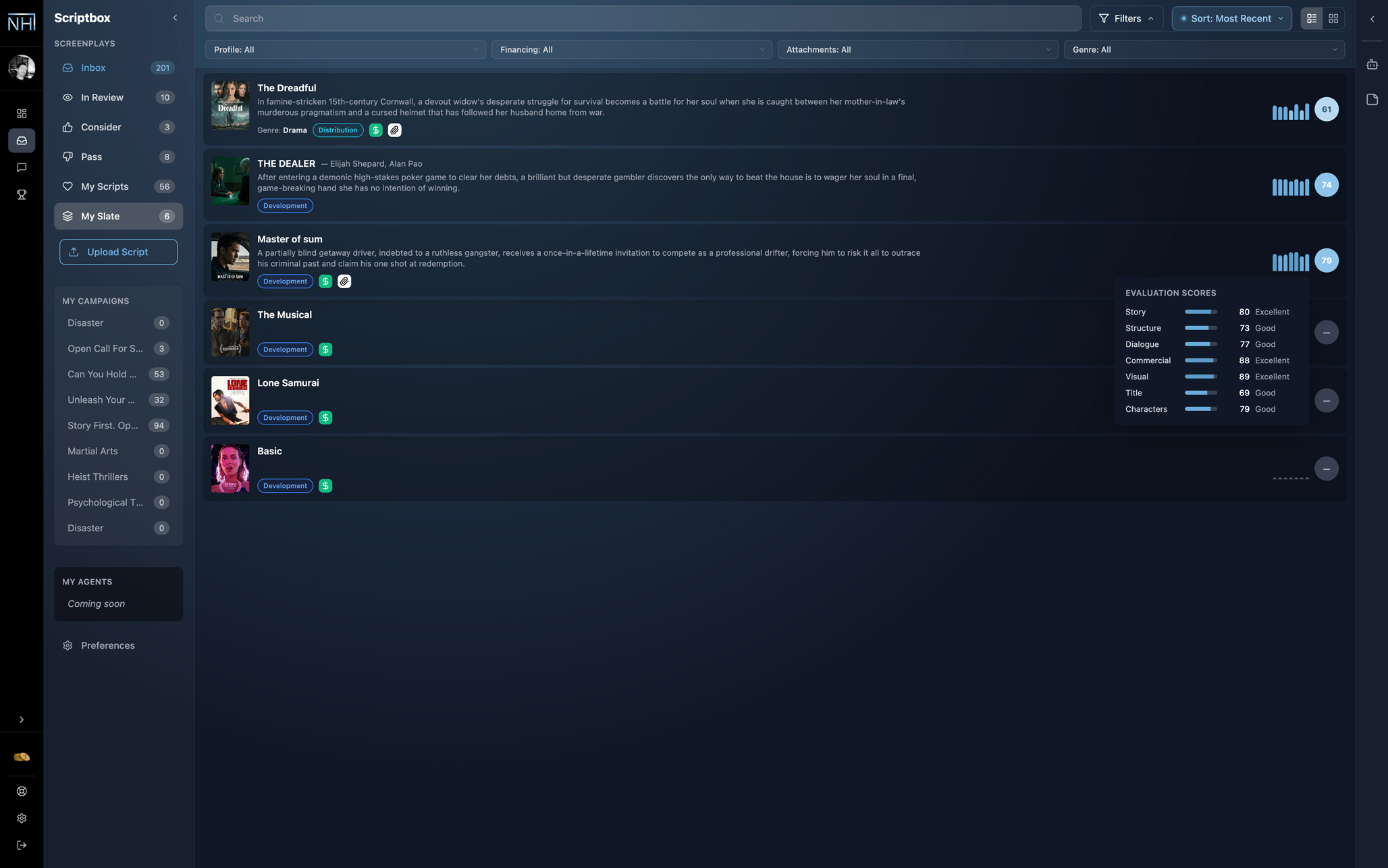
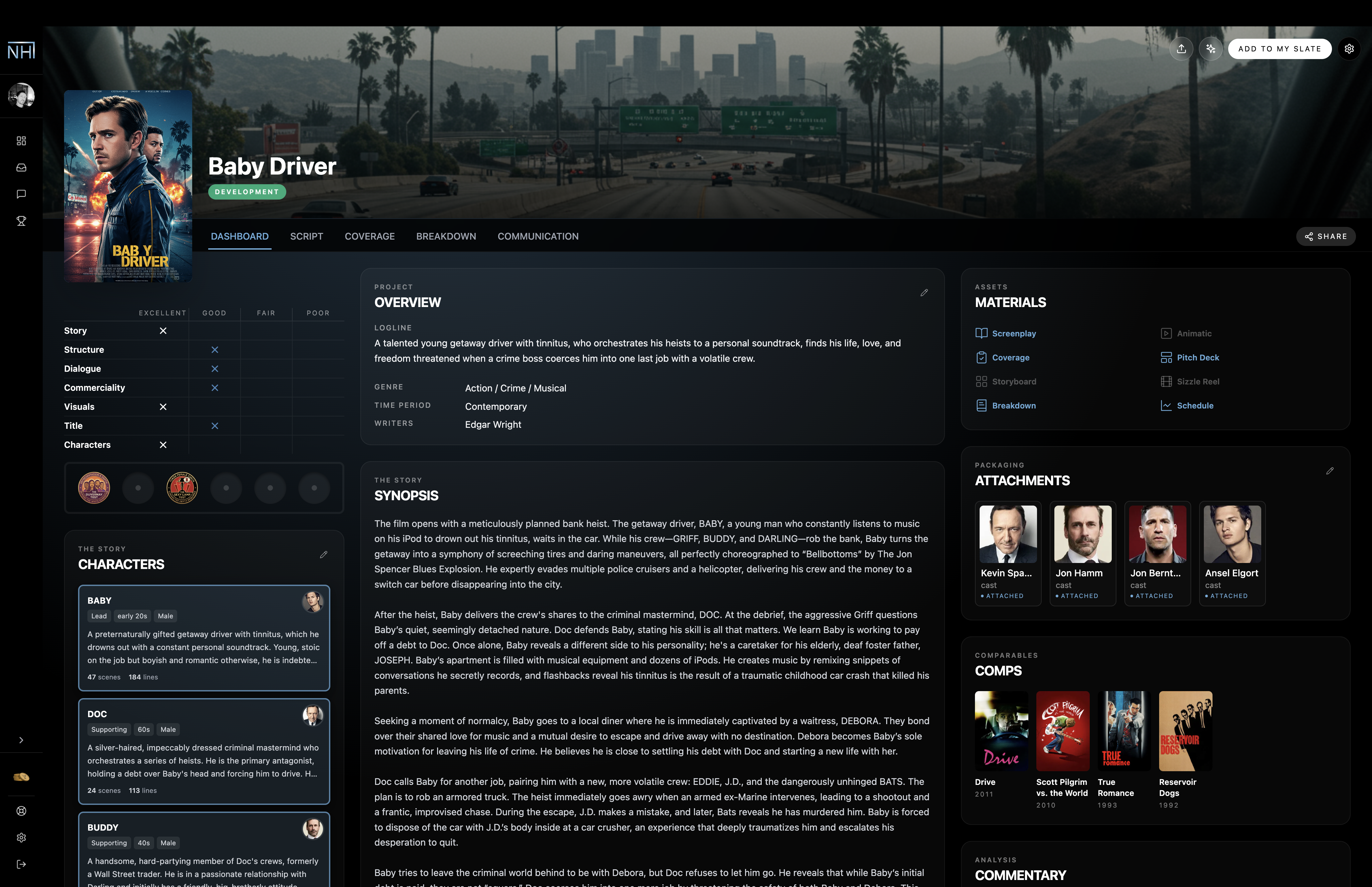
Robust Project Pages
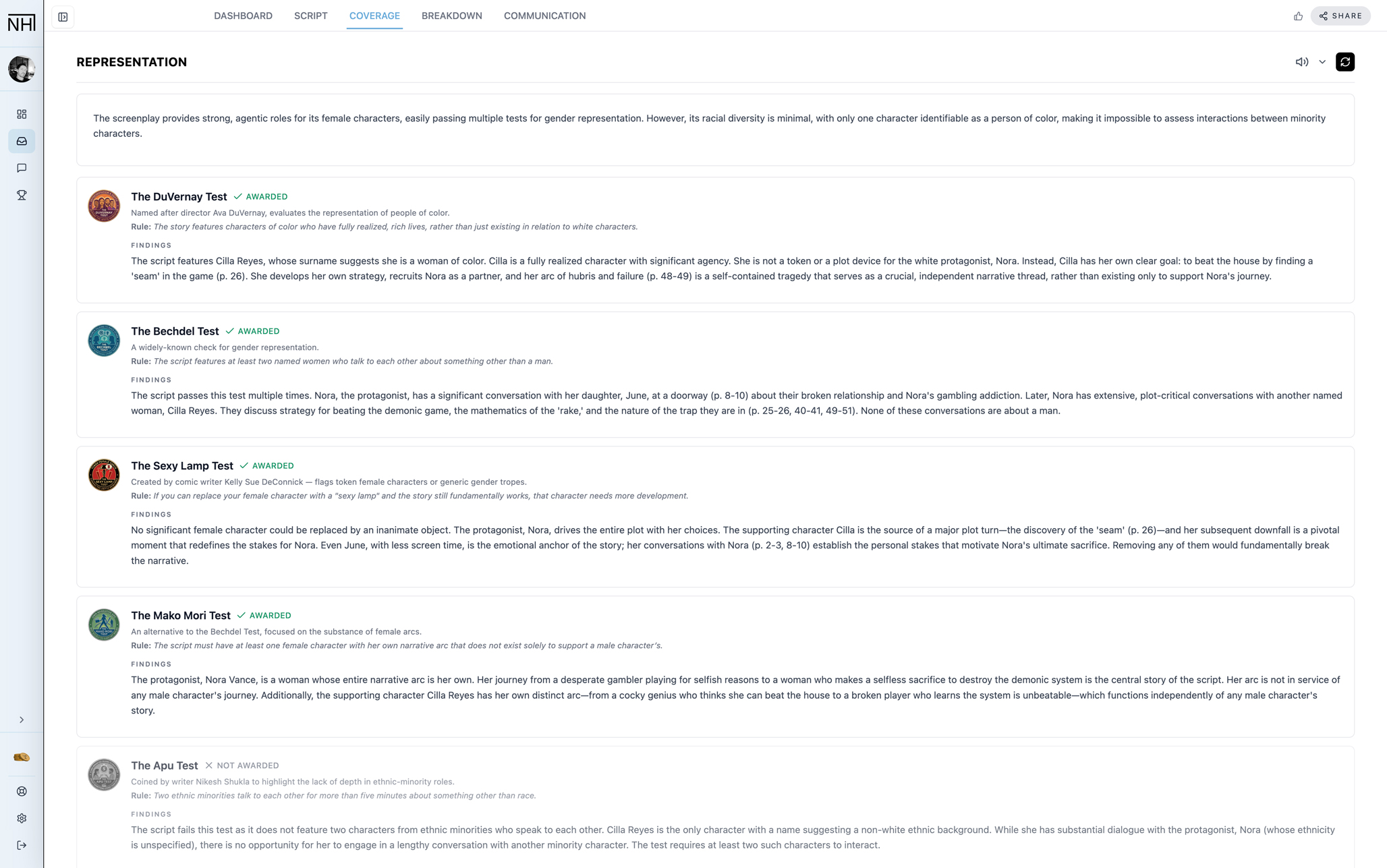
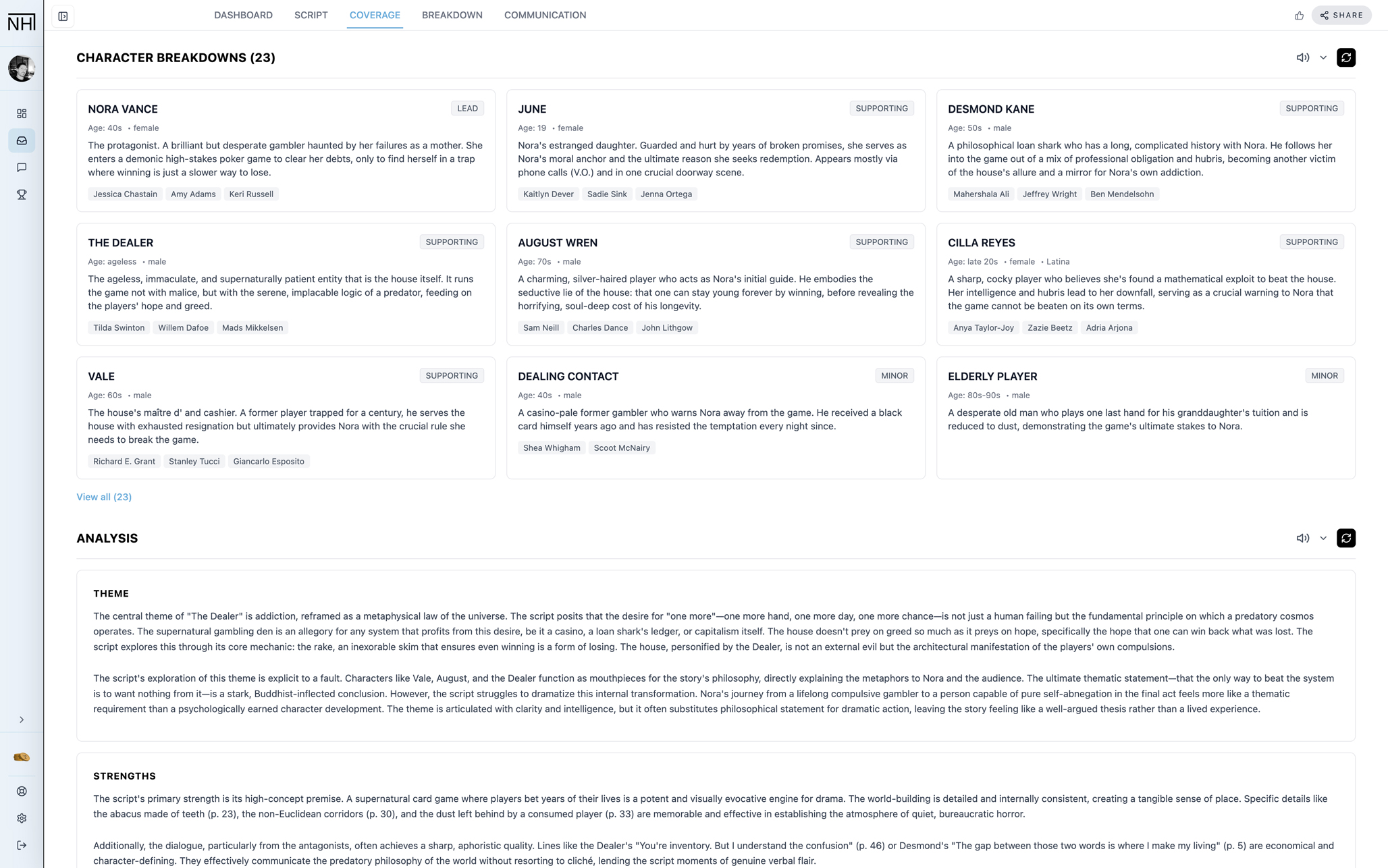
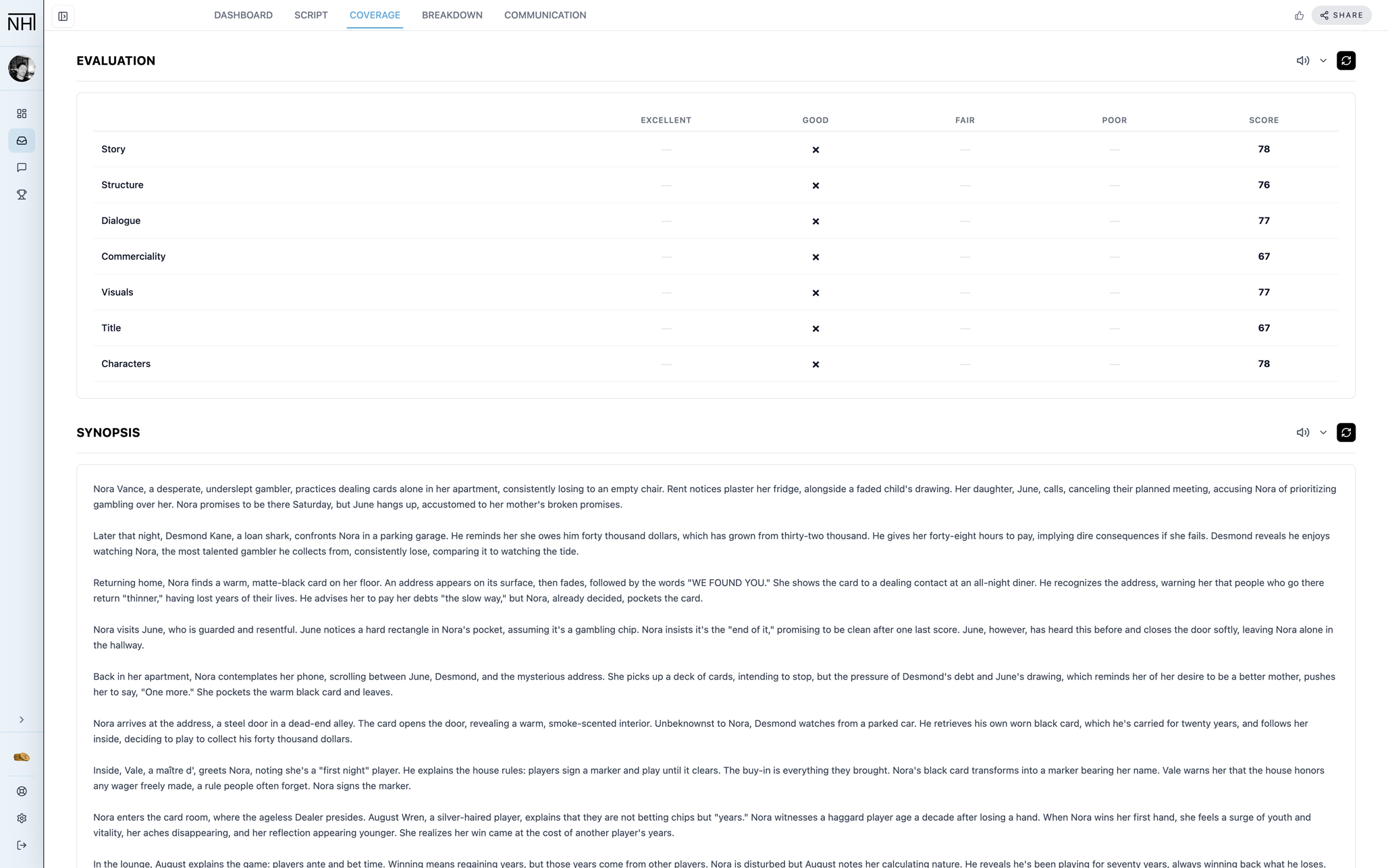
View and manage your projects in one place. Each project page feature automatically generated content based on the script, including breakdown, coverage, analysis and recommendations, schedule, and more.
Risk Diversification & Portfolio Management
Just like a financial fund, a production company shouldn't put all its money or time into one type of project. If a company only develops $150M sci-fi epics, a single cancellation can bankrupt them. A slate management tool helps executives visualize their portfolio balance.
Budget Balancing
Ensuring a healthy mix of low-budget, high-margin projects (e.g., horror, contained thrillers) alongside prestigious, higher-budget prestige dramas or studio tentpoles.
Format Diversification
Tracking the ratio of feature films, episodic television, limited series, and unscripted/documentary content.
Target Buyer Mapping
Tagging projects based on their ideal home (e.g., 'Perfect for Netflix binge-watching' vs. 'Prestige theatrical release for A24').
Option Tracking & Legal Deadlines (The Countdown Clock)
When a company likes a script, they rarely buy it outright immediately. They option it — paying a smaller fee to lock up the exclusive rights to the script for a set period (usually 12 to 24 months) while they try to get it financed.
The Option Clock
Missing an option renewal deadline means the rights automatically revert back to the writer, and all the work the company put into packaging the film is lost. The slate management system acts as a legal alarm clock, tracking execution dates and sending automated warnings 90, 60, and 30 days before an option expires.
Chain of Title Repository
Centralizes all essential legal documentation required to eventually sell the movie to a studio — including writer contracts, underlying IP agreements (if based on a book), music clearances, and quit-claims.
Executive Slate Analytics & Reporting
In development meetings, senior leadership needs a bird's-eye view of the company's entire health. The slate dashboard rolls up individual project data into high-level executive reports.
Executive Load Balancing
Tracking which creative executives are managing too many active developments, and who has the bandwidth to take on a new project from a recent campaign.
Pipeline Velocity
Analyzing how long projects are stalling in 'Development Hell.' If a script has been in the rewriting phase for 18 months without a new draft, the system flags it as stagnant.
Slate Valuation (Estimated vs. Realized)
Allowing producers to see the total potential value of their slate, tracking sunk development costs (what they've spent on options and writers) against projected production budgets.
Film development is notoriously chaotic, with projects constantly dying, reviving, changing writers, or switching formats. Managing a slate inside a dedicated digital workspace ensures that a production company's intellectual property is treated like a structured business portfolio, preventing multi-million dollar legal mistakes and ensuring a steady stream of content actually makes it to the screen.